Urysohn's Lemma and Tietze Extension Theorem
Theorem
Urysohn’s Lemma1
If $X$ is a normal space, then for all closed sets $A, B \subset X$ with $A \cap B = \emptyset$, there exists a continuous function $f:X \to [0,1]$ satisfying $f(A) = \left\{ 0 \right\}$ and $f(B) = \left\{ 1 \right\}$.
Tietze Extension Theorem2
For a closed set $C$ in a normal space $X$, if $f : C \to \mathbb{R}$ is continuous, then there exists a continuous function $F : X \to \mathbb{R}$ satisfying $F |_{C} = f$.
Explanation
Urysohn’s lemma is invoked in all sorts of fields that use topology, and fittingly, its very statement looks quintessentially topological.
The Tietze extension theorem is a theoretical foundation used so frequently in real function theory (probability theory) and the like that it is not even called a theorem separately.
However, since normality is a required condition, these theorems are not so easy to apply as they are. Perhaps for this reason, a great deal of effort is devoted in general topology to showing the normality of a space.
- (1): Metric spaces are normal spaces.
- (2): Compact Hausdorff spaces are normal spaces.
- (3): Lindelöf regular spaces are normal spaces.
The relationships among spaces with separation properties can be diagrammed as follows.
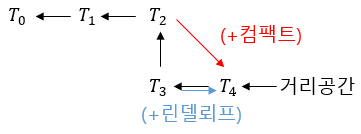
That a space is a normal space essentially means it has almost all of the separation properties. Even if there were bizarre spaces like $T_{1.5}$ or $T_{3.5}$, as long as this kind of notation is being used, $T_{4}$ has their properties.