
Rules for Abbreviations such as Fig., Eq., Ref. in Paper Writing
Overview
Rather than ordinary abbreviations, this post organizes the rules for terms frequently used in papers such as Fig., Eq., Ref., along with examples. Since styles can differ from journal to journal, it is best to consult each journal’s guide, but even so, most of these can be regarded as nearly universal.
Rules 1
Very simply, you only need to observe the following three points.
1. Table is not abbreviated
Figure, Equation, and Reference are abbreviated as Fig., Eq., Ref., but Table is not abbreviated and is written as Table as is. Note that abbreviations also have number agreement, so multiple Figures, Equations, and References are written as Figs., Eqs., Refs. Table is not abbreviated either, but it does have number agreement. If it is hard to remember that Table is an exception, it is convenient to think of Table as an abbreviation that simply does not put a period, namely Table.
| Original | Abbreviation | Abbreviation (plural) |
|---|---|---|
| Figure | Fig. | Figs. |
| Equation | Eq. | Eqs. |
| Reference | Ref. | Refs. |
| Table | Table | Tables |
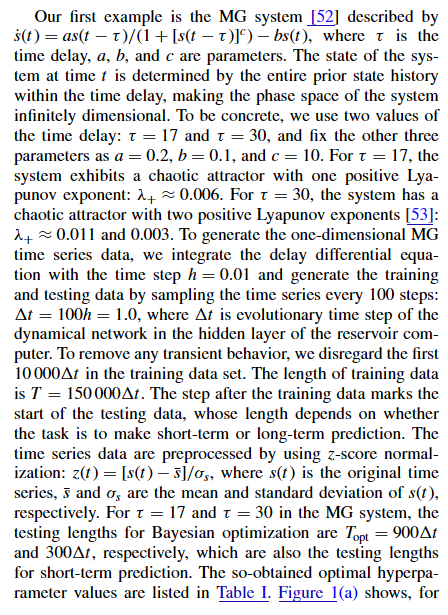
- Table 1 came at the end of the sentence but was not abbreviated:
- Multiple tables were mentioned at the same time, so Table also became plural:
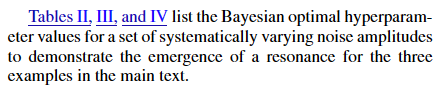
Figure numbers are not enclosed in parentheses
- Notations such as (a), (b) that indicate subfigures within one large figure are called panel labels. The figure number and the panel label are written together with no space between them:
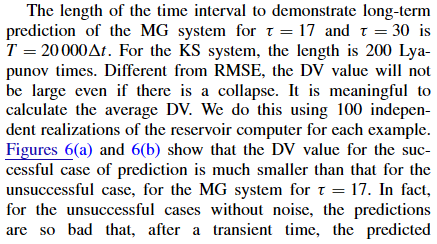
Note that a single space goes between the word and the number. In particular, in $\LaTeX$ you add ~, a space that does not allow line breaks, and write it like Fig.~\ref{fig:loss}(a).
Equation numbers are enclosed in parentheses
- The equation number was enclosed in parentheses after Equation or Eq.:
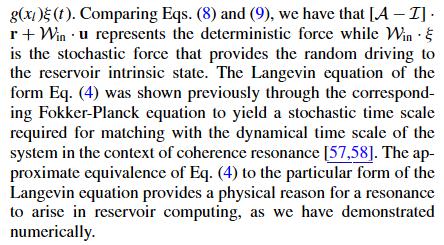
Likewise, a single space goes between the word and the parentheses. In particular, in $\LaTeX$ you add ~, a space that does not allow line breaks, and write it like Eq.~(\ref{eq:loss}).
Reference numbers usually need no attention
- Reference number 35 appeared as Ref. [35]:
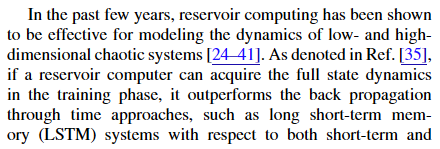
In $\LaTeX$, without paying particular attention it may automatically be enclosed in square brackets, or it may be parentheses, or it may go up as a superscript. However, one thing to note is that if there is a comma or period that breaks the sentence, \cite{} should go before it.
2. If it begins a sentence, spell it out
Regardless of when it appears within the paragraph, if it appears at the beginning of a sentence, spell it out. Whether it was mentioned before or not is also completely irrelevant.
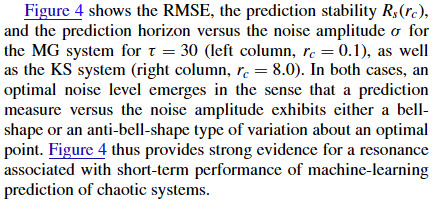
- Whether at the beginning or middle of the paragraph, at the sentence level Figure 4 is at the very front, so it was spelled out:
3. If it is not the beginning of a sentence, use the abbreviation
If it is not the beginning of a sentence, use the abbreviation.
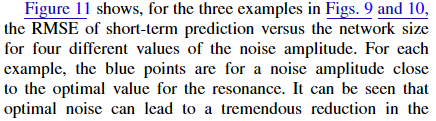
- Even for the same Figure, Figure 11 written at the very front of a sentence was spelled out, but Fig. 9 and 10 appeared in the middle of a sentence and were therefore written as abbreviations:
Zhai, Z. M., Kong, L. W., & Lai, Y. C. (2023). Emergence of a resonance in machine learning. Physical Review Research, 5(3), 033127. https://doi.org/10.1103/PhysRevResearch.5.033127 ↩︎